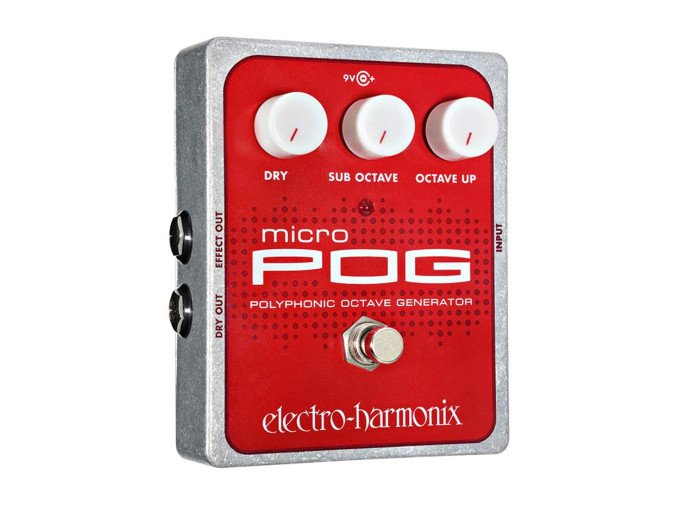
The Electro Harmonix Micro POG is one of the most famous octave pedals ever produced. Known for its tracking accuracy and organ-like octave textures, the pedal can generate both one octave above and one octave below the original guitar signal. In blues and modern blues rock it is often used subtly to thicken single note lines or to create a larger sounding rhythm tone without losing clarity.
Manufacturer and Model Background
The pedal is built by Electro-Harmonix, a legendary American effects manufacturer founded by Mike Matthews in New York in 1968. The company became famous for groundbreaking pedals such as the Big Muff fuzz and the Electric Mistress flanger.
The Micro POG was introduced around 2008 as a compact version of the original POG (Polyphonic Octave Generator). The original POG had become extremely popular but was relatively large and expensive. The Micro POG kept the same core technology but reduced the size and simplified the controls.
Unlike traditional octave pedals that struggle with chords, the Micro POG uses digital polyphonic pitch shifting. This means it can track complex chords cleanly without glitching or producing the artifacts typical of older analog octave circuits.
The control layout is straightforward. A Dry knob sets the original guitar signal, Sub Octave adds one octave below, and Octave Up adds one octave above. This simple interface makes the pedal extremely versatile and easy to dial in on stage.
Why This Pedal Matters in Blues
Octave effects have a long history in blues guitar. Classic octave fuzz sounds were made famous by players such as Hendrix, but modern polyphonic octave pedals opened a different set of musical possibilities.
In blues contexts the Micro POG is often used very lightly. Adding a small amount of sub octave creates the impression of a thicker guitar tone, almost like a second guitar or a baritone instrument underneath the main signal.
The octave up control can add shimmer to rhythm parts or create organ-like textures when playing chords.
What Respected Blues Guitarists Did With It
Modern blues guitarists frequently experiment with octave pedals to expand the sonic range of a trio.
Joe Bonamassa has used octave effects to create organ-like rhythm textures and thicker lead sounds in live settings.
Kenny Wayne Shepherd has incorporated octave-based effects for heavier blues rock tones, particularly when layering lead sounds.
Players inspired by Stevie Ray Vaughan sometimes use octave pedals as a modern way to add weight to single note lines while keeping the expressive Texas blues feel.
Sound Profile
The Micro POG produces a clean and extremely accurate octave sound.
The sub octave adds strong low end without muddying the signal, while the octave up introduces a bright harmonic layer.
The original guitar midrange remains intact because the dry signal is always present.
The pedal adds very little compression and tracking remains precise even with fast blues runs or chord work.
The sub octave can create a surprisingly powerful rhythm sound, almost like adding a second instrument to the stage.
With humbuckers the octave effect becomes fuller and more aggressive, especially when pushed into an overdrive pedal.
Through a Deluxe Reverb or Bassman the octave signal stays clear and articulate, sitting naturally in the mix.
What Makes It Special
The defining feature of the Micro POG is its polyphonic tracking. Unlike older octave pedals that only work well with single notes, the Micro POG handles full chords cleanly.
Another strength is the blend control approach. Because the dry signal remains present and independently controlled, the effect can be blended subtly into the guitar tone without overwhelming it.
The pedal is also extremely quiet and reliable, making it suitable for professional touring setups where consistency matters.
Why Gerbman Uses It
Gerbman's sound is rooted in traditional blues tones, but the Micro POG adds a modern layer of sonic flexibility that serves the trio format.
In a power trio like Gerbman & Blues Flood the pedal can make the guitar sound larger and more powerful. A touch of sub octave during rhythm parts creates a heavier groove, while a slight octave up adds sparkle to clean passages.
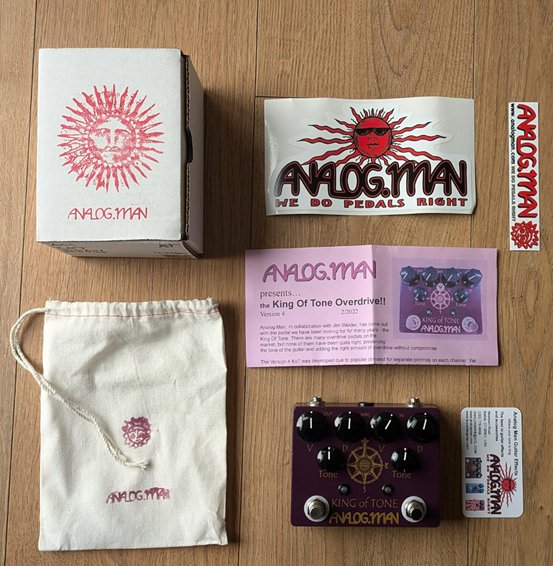
Placed early in the signal chain, before overdrive pedals such as the King of Tone, the Micro POG allows the stacked harmonics to interact naturally with the rest of the pedalboard and the amplifier.
For certain instrumental sections or jam moments it can even produce organ-like textures that fill the stage with sound, supporting both rhythm and lead playing without losing the clarity and dynamics that define great blues tone.
Rarity and Availability
The Micro POG is still in production and widely available. Because of its popularity and reliability it is one of the most common octave pedals on modern pedalboards.
Despite its availability it remains one of the most respected polyphonic octave pedals on the market and continues to be a first choice for professional guitarists looking for a reliable, musical octave effect.
Variants and Alternatives
The original Polyphonic Octave Generator. Larger enclosure with more controls and greater flexibility.
Expanded version with additional controls and preset storage. More options, same core technology.
A budget-friendly alternative offering similar polyphonic octave capabilities at a lower price point.
Older analog octave pedals such as the MXR Blue Box produce a very different, fuzz-based octave sound popular in classic blues rock.