Fender 1959 Bassman Reissue
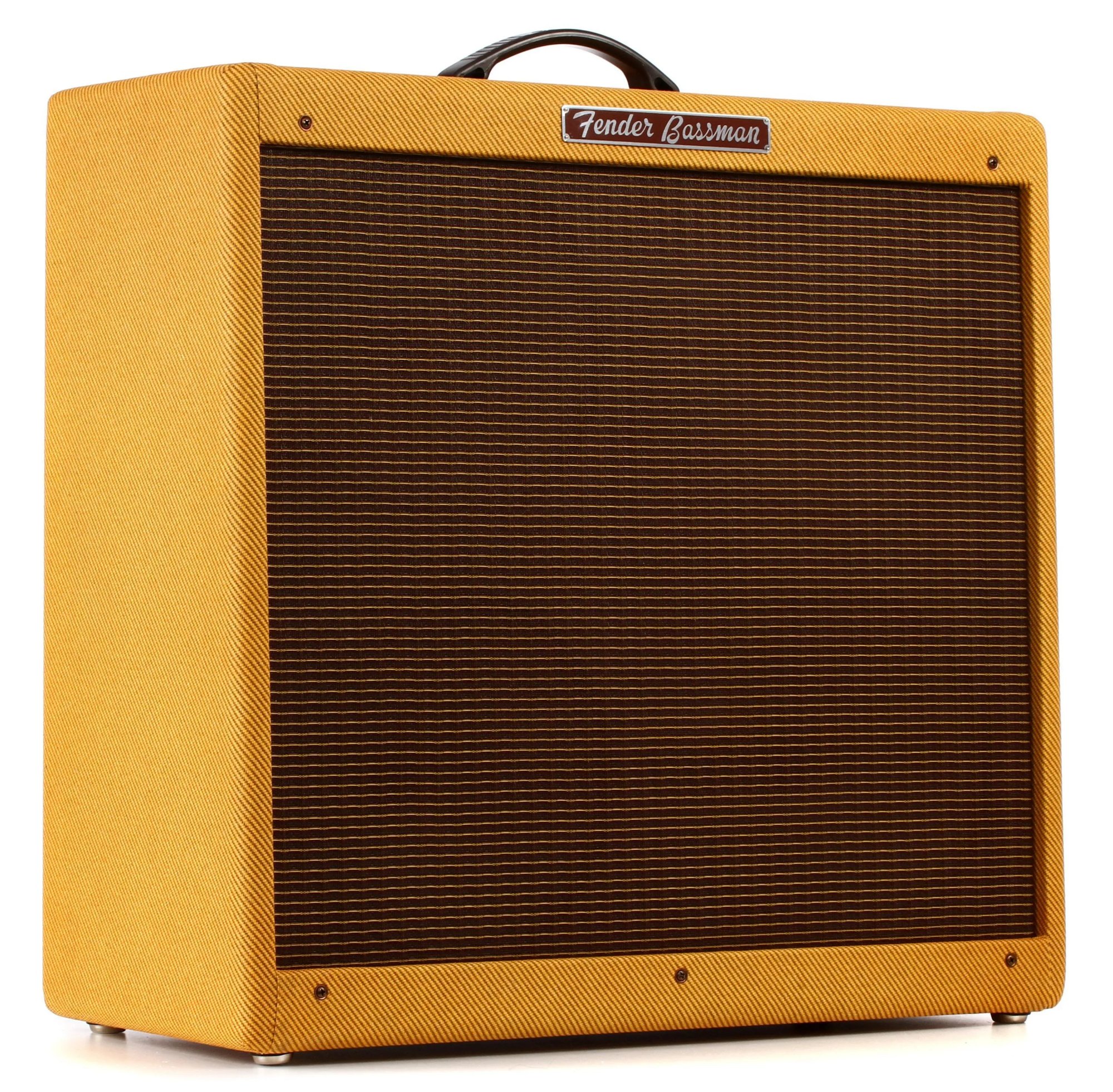
The Fender 1959 Bassman Reissue is one of the most influential tube amplifiers ever built. Originally designed in the late 1950s as a bass amplifier, the circuit quickly became legendary among guitarists for its powerful clean headroom, rich midrange and smooth overdrive. The modern reissue recreates the classic 5F6-A tweed Bassman circuit that shaped the sound of countless blues recordings.
Manufacturer and Model Background
The original Fender Bassman first appeared in 1952 as a small combo amplifier intended for electric bass. By 1959 Fender had refined the design into what became the most famous version, the 5F6-A tweed Bassman. This circuit used four 10-inch speakers and a powerful tube configuration built around 6L6 power tubes. The amp delivered more volume and headroom than earlier designs while maintaining a warm, responsive tone.
The 5F6-A circuit became so influential that it later inspired the first Marshall amplifiers. In fact the earliest Marshall JTM45 was essentially a modified interpretation of the Fender Bassman circuit. Fender introduced the '59 Bassman Reissue in the early 1990s, recreating the tweed combo using modern production techniques while staying extremely faithful to the original circuit.
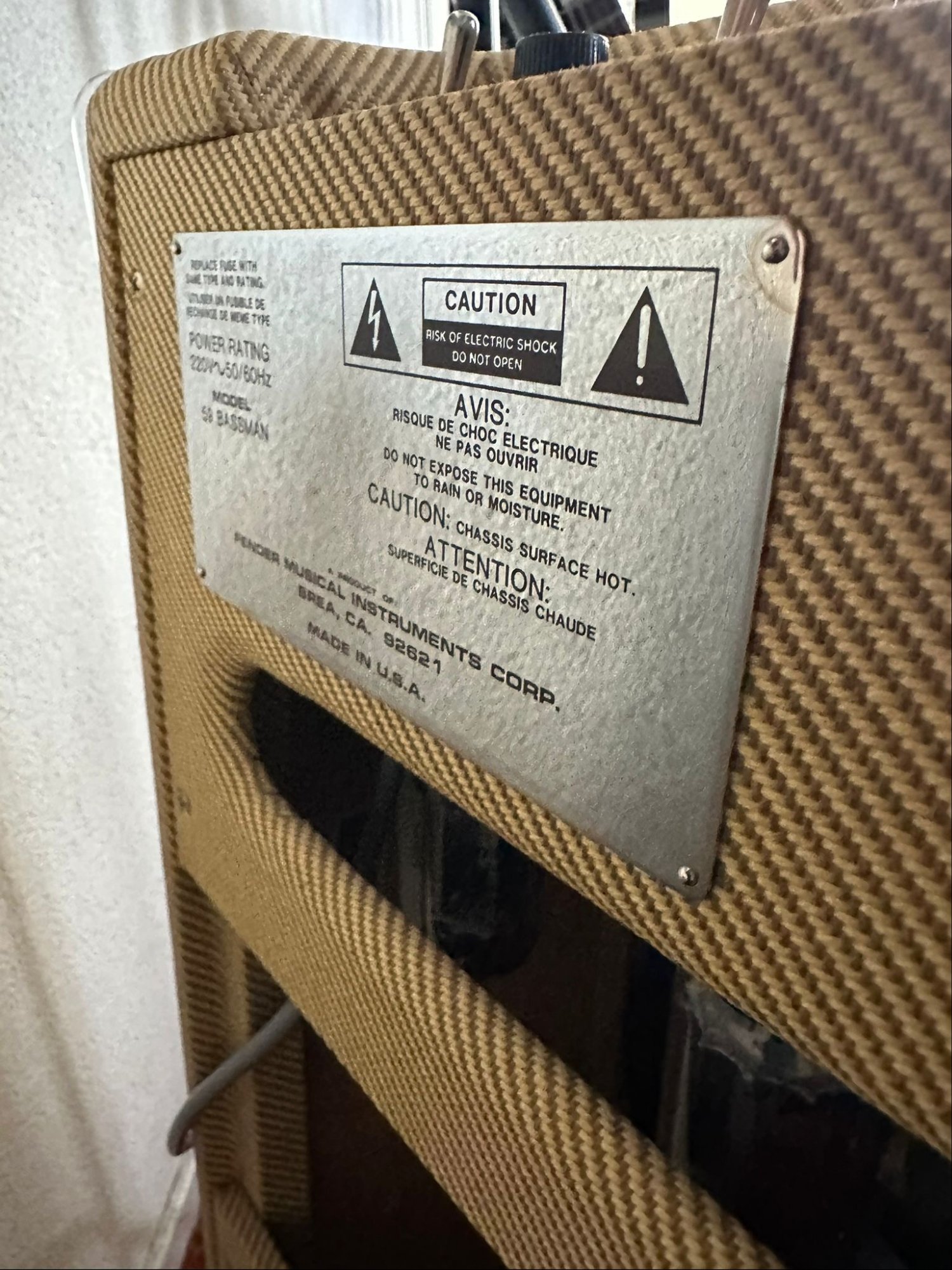
This specific unit is a European-spec Fender '59 Bassman Reissue (Model 5F6-A), confirmed by the internal tube chart and chassis labeling. The amplifier is configured for 220V operation, making it suitable for use in Europe without an external transformer. The internal Fender tube chart, quality assurance sticker and factory markings indicate an original, unmodified reissue build.
Why This Amp Matters in Blues
Few amplifiers define the sound of electric blues like the tweed Bassman. The circuit delivers a very specific character that blues players love: powerful clean tones that start to compress and break up when pushed hard. That transition from clean to overdrive responds directly to picking dynamics and the guitar's volume knob.
Instead of a harsh distortion, the Bassman produces a warm, singing breakup that works beautifully with Stratocasters and vintage single-coil pickups. This ability to move from glassy clean rhythm to thick Texas blues lead tones is exactly why the Bassman became a cornerstone of blues amplification.
What Respected Blues Guitarists Did With It
Many legendary blues guitarists relied on Bassman-style amplifiers to create their signature sound. Stevie Ray Vaughan used Fender '59 Bassman Reissues during his 1990 tour, replacing some of his earlier Super Reverb setups. These early reissue models align more closely with this unit than the later Bassman LTD versions, making this amplifier directly relevant to that era of SRV's live tone. The Bassman gave him a slightly tighter low end and a more aggressive midrange that worked perfectly with his powerful Stratocaster tone.
Buddy Guy has long favored tweed-style Fender circuits for their dynamic response and touch sensitivity. Modern blues players such as Joe Bonamassa also use vintage tweed Fender amplifiers in studio environments to capture classic blues tones. Because the Bassman circuit became the blueprint for many British amplifiers, its influence can also be heard indirectly in countless blues recordings from the 1960s onward.
Sound Profile
The Fender 1959 Bassman Reissue has a distinctive tonal character that sits perfectly in blues and blues-rock. This unit retains its original blue frame Fender speakers, commonly associated with earlier '59 Bassman Reissue production rather than the later Bassman LTD versions fitted with Jensen P10R speakers. Compared to Jensen-equipped versions, these blue frame speakers deliver a slightly tighter low end, firmer attack and a more controlled response on stage. The result is a punchy, focused sound that still maintains the wide dispersion and dynamic feel of the classic four-by-ten Bassman design.
What Makes It Special
Several technical elements make the Bassman unique. First is the 5F6-A circuit design, which combines a long-tail phase inverter with a powerful 6L6 power section. This allows the amp to remain clean at moderate volumes while still producing rich overdrive when pushed.
Second is the four-speaker configuration. Four 10-inch speakers respond faster than larger speakers and create a punchy attack that suits blues phrasing. Third is the interactive tone stack. The presence, bass, middle and treble controls interact with each other in a way that allows fine shaping of the amp's character. Finally there is the build philosophy. Tweed Bassman amplifiers rely on simple, musical circuits rather than heavy signal processing or modern channel switching.
What makes this particular amp stand out is its originality. The internal Fender tube chart, factory QC sticker and untouched layout confirm a clean, unmodified reissue that stays true to the original 5F6-A design philosophy. No modifications, no recapping, no speaker swaps — exactly as it left the factory.
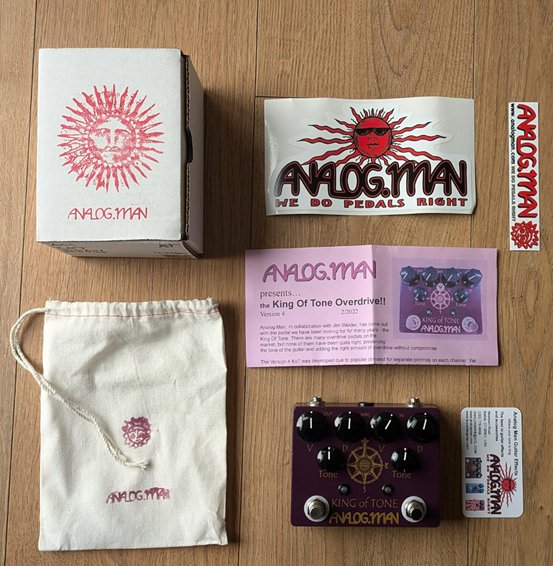
For a guitarist like Gerbman, whose core sound is built around Stratocasters and expressive blues phrasing, the Bassman circuit is an ideal match. The amplifier provides enough clean headroom for rhythm playing while still allowing natural tube breakup when pushed by overdrive pedals such as the Tube Screamer or King of Tone.
Stacking those pedals into a Bassman-style amplifier produces the classic blues lead tone heard on many SRV-inspired recordings. Because the amp responds strongly to picking dynamics, it also supports Gerbman's expressive playing style during jams and live performances.
Rarity and Availability
The Fender '59 Bassman Reissue is still in production in versions such as the Bassman LTD. Vintage originals from the late 1950s are extremely collectible and can reach very high prices on the vintage market. The reissue models remain widely available and are considered professional stage amplifiers rather than rare collector pieces. Common for reissue models. Highly collectible for original 1950s versions.
Variants and Alternatives
- Fender '59 Bassman LTD — updated reissue with Jensen speakers and pine cabinet
- Original 1959 Bassman — the true 5F6-A circuit, highly collectible vintage amp
- Victoria / Clark Amplification — boutique builders making extremely accurate Bassman recreations
- Fender Bassbreaker series — modern format capturing some Bassman character at lower cost