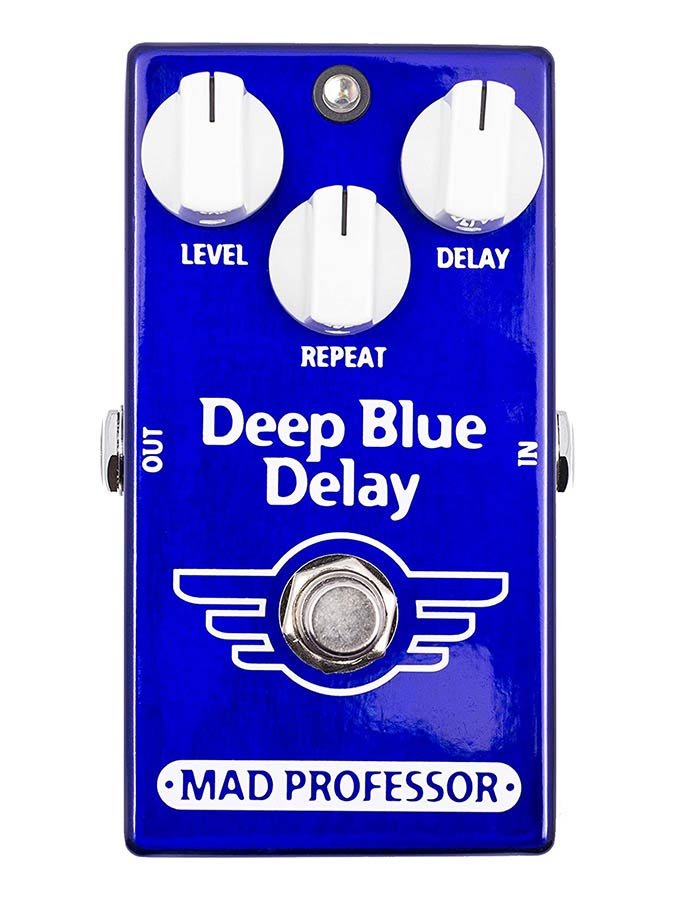
Mad Professor Deep Blue Delay
The Mad Professor Deep Blue Delay is widely regarded as one of the most musical delay pedals ever created for blues guitar. Rather than focusing on long ambient repeats or complex digital features, the pedal is designed to deliver warm, natural echo that sits behind the original guitar tone. Its repeats feel almost like the reflections of a small room or vintage tape unit, which is exactly why many blues and roots players prefer it.
Manufacturer and Model Background
Mad Professor is a boutique effects brand founded in Finland by amplifier designer Björn Juhl. Juhl became known for designing extremely touch sensitive circuits that react naturally to a guitarist's playing dynamics.
The Deep Blue Delay was introduced in the late 2000s as part of Mad Professor's original handwired series and later released in a compact production model built in Finland and Taiwan. The design goal was simple but ambitious. Create a delay pedal that sounds as natural as the echo you would hear in a great blues recording room.
Unlike many digital delay pedals that emphasize clarity and brightness, the Deep Blue Delay intentionally softens the repeats so they sit underneath the original signal. This approach makes the effect blend into the guitar tone rather than compete with it. The pedal remains in production and has become one of Mad Professor's most successful designs.
Why This Pedal Matters in Blues
Blues guitar often benefits from subtle spatial effects rather than obvious delay. Classic recordings by players like B.B. King or Albert King rarely used long echoes. Instead the sound of the room or a short slapback delay gave the guitar depth without distracting from the phrasing.
The Deep Blue Delay recreates that feeling extremely well. The repeats are warm, slightly compressed and never harsh. This allows the guitar to stay front and center while the delay adds dimension. For players using vintage style Fender amplifiers the pedal helps recreate the spacious sound of classic blues recordings without washing out the articulation.
What Respected Blues Guitarists Did With It
While the Deep Blue Delay is not tied to one single signature blues guitarist, it has been widely adopted by players who prioritize natural dynamics. Modern blues artists such as Joe Bonamassa and John Mayer often use subtle delay to thicken lead tones. The philosophy behind the Deep Blue Delay fits perfectly into this approach.
Instead of obvious rhythmic repeats, the delay creates a halo around sustained notes. This makes bends and vibrato sound larger and more expressive without masking the pick attack. This approach also mirrors the way vintage tape echoes and studio slapback delays were used in many classic blues and early blues rock recordings.
Sound Profile
The Deep Blue Delay is famous for its warm, organic character.
What Makes It Special
Several design decisions make the Deep Blue Delay stand out. The circuit is carefully tuned to avoid overly bright repeats. Instead it focuses on warmth and musicality. The pedal also avoids modulation or extra features that might complicate the sound.
With only three controls for delay time, repeat and level, the guitarist can quickly dial in a natural echo. The result is a delay pedal that feels almost invisible in the signal chain. It enhances the guitar tone rather than changing it. A short setting creates a classic slapback feel while slightly longer times add sustain and space to lead lines.
For a blues guitarist like Gerbman, delay is rarely meant to be a prominent effect. Instead it should subtly expand the sound of the guitar. Placed after overdrives on the pedalboard, the Deep Blue Delay adds depth to lead phrases without cluttering the mix.
When Gerbman plays sustained bends or expressive vibrato lines, the delay creates a gentle echo that makes the guitar sound bigger and more atmospheric. Combined with a Stratocaster and a Fender style tube amplifier, the pedal helps produce a spacious Texas blues tone while keeping the attack clear and dynamic.
Rarity and Availability
The Deep Blue Delay is still in production and widely available. However, the original handwired Mad Professor versions are more sought after by collectors. These early units were built in Finland and are considered boutique classics. Somewhat rare in the handwired version, common in the current production model.
Variants and Alternatives
- Mad Professor Deep Blue Delay Handwired — original boutique build made in Finland
- Mad Professor Deep Blue Delay Factory — current production model, same circuit design
- Roland RE-201 Space Echo — the vintage tape echo that inspired this tonal philosophy
- Analog Man ARDX20 — boutique alternative with a similar warm analog approach
- MXR Carbon Copy — darker analog delay popular among blues players