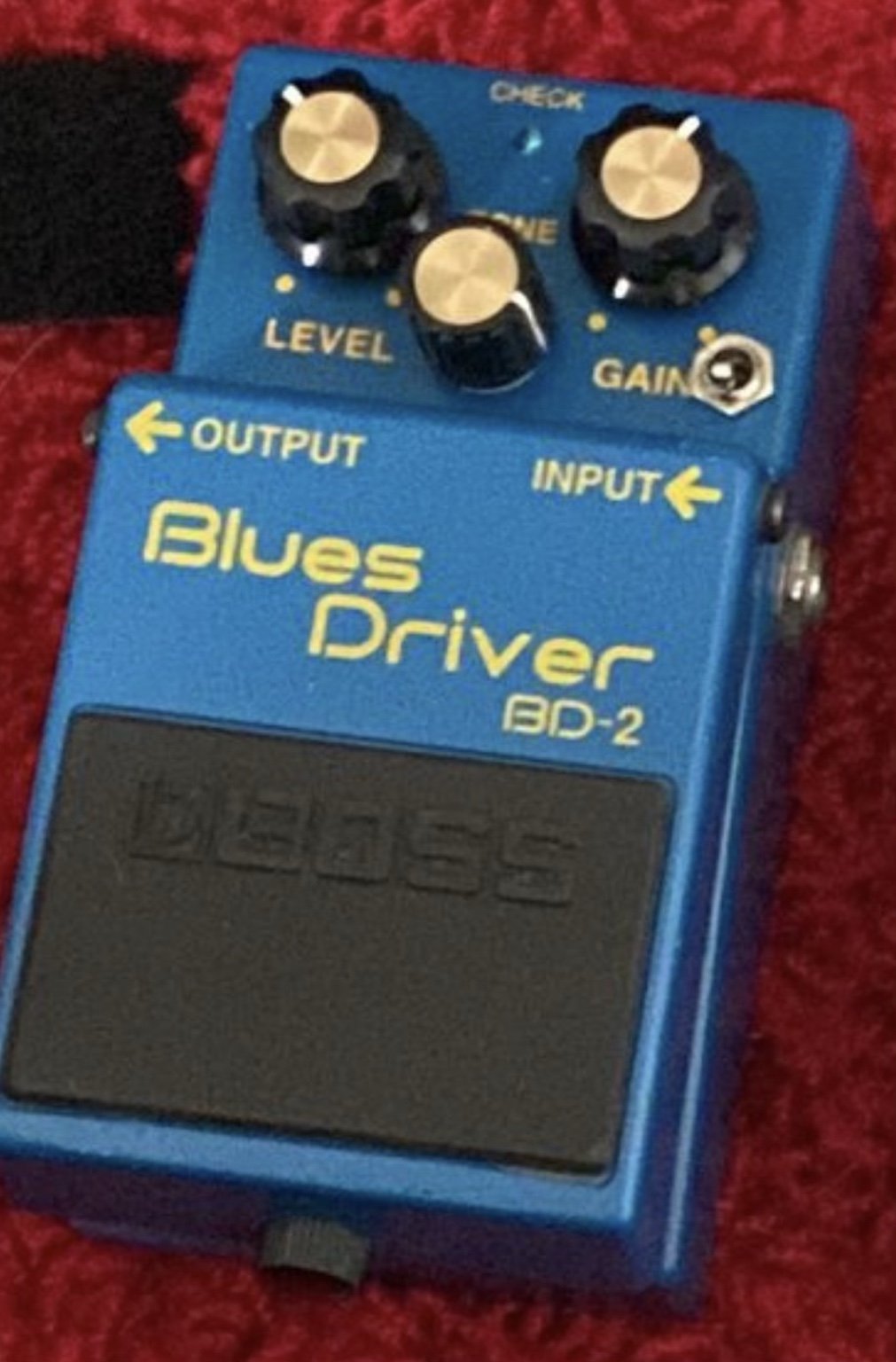
Boss Blues Driver BD-2
The Boss Blues Driver BD-2 is one of the most widely used blues overdrive pedals ever made. Introduced in the mid 1990s, it was designed to recreate the feel and breakup of a pushed tube amplifier rather than the heavier compression of classic overdrives like the Tube Screamer. The result is an open, dynamic drive that responds strongly to picking attack and the guitar's volume knob. For players chasing expressive blues tones, the BD-2 became a reliable way to add grit, sustain and touch sensitivity without masking the natural character of the guitar and amplifier.
Manufacturer and Model Background
Boss, a division of the Japanese company Roland, introduced the Blues Driver BD-2 in 1995. At that time many guitarists were looking for pedals that felt more like an amplifier breaking up instead of the heavily compressed mid-boost sound that dominated earlier overdrives. The BD-2 was designed specifically to mimic the sound of a small tube combo pushed into natural breakup. Unlike a Tube Screamer style circuit, the Blues Driver has a wider frequency response and less pronounced mid hump.
Production has continued for decades and the pedal remains one of the core models in the Boss lineup. Because of its reliability, simple control layout and musical response it became a staple on both amateur and professional pedalboards.
Why This Pedal Matters in Blues
Blues guitar tone often depends on subtle dynamic control rather than heavy distortion. The Blues Driver excels at this because it behaves almost like an extension of the amplifier. Light picking produces nearly clean tones while harder picking introduces gritty breakup. This allows players to shape phrases through touch rather than relying on switching pedals on and off.
The pedal also stacks well with other drives, which makes it particularly useful in modern blues rigs where players combine multiple gain stages to shape their sound.
What Respected Blues Guitarists Did With It
While the BD-2 itself appeared decades after classic blues recordings, its tonal philosophy closely matches the approach used by legendary players. Stevie Ray Vaughan relied on amplifiers driven close to breakup and used pedals mainly as a push into the amp. The Blues Driver captures a similar responsive feel, which is why many modern SRV-inspired players use it. Eric Clapton style blues tones also benefit from the BD-2 because it preserves clarity while adding smooth sustain.
Contemporary blues players such as John Mayer have used Blues Driver style circuits or similar low-compression drives to maintain expressive dynamic range. Because of its transparency the BD-2 became popular among guitarists who want their Stratocaster or Les Paul to remain clearly recognizable in the mix.
Sound Profile
The sound of the Blues Driver is open, articulate and touch sensitive.
What Makes It Special
The Blues Driver is special because of its balance between simplicity and musicality. The circuit emphasizes dynamic headroom and a relatively transparent EQ curve. This allows the pedal to behave almost like an additional gain stage inside the amplifier rather than a separate effect.
Another factor is reliability. Boss pedals are known for their rugged construction, buffered bypass and consistent manufacturing quality. Many BD-2 units remain on pedalboards for decades without issues. Because the pedal works equally well as a light overdrive, a medium gain blues drive or even a boost into another pedal, it has remained relevant long after its introduction.
For a blues guitarist like Gerbman, the Blues Driver fits perfectly into a tone built around Stratocasters and Fender amplifiers. Placed early in the signal chain it acts as a dynamic first stage overdrive that reacts directly to picking attack. It can also be stacked with pedals such as a Tube Screamer, Klon style drive or Marshall style overdrive to create multiple gain layers.
In a Texas blues style rig the BD-2 often serves as the gritty edge-of-breakup sound that sits between clean rhythm and saturated lead tones. Because Gerbman frequently plays relic Stratocasters and vintage style amps, the Blues Driver helps preserve the character of those instruments while adding expressive drive.
Rarity and Availability
The Boss BD-2 is not rare. It is widely available and has been in continuous production for decades. Classification: common. Early Japanese and Taiwanese production units sometimes attract collector interest, but on the used market the BD-2 remains affordable, which contributes to its ongoing popularity.
Variants and Alternatives
- Boss BD-2W Waza Craft — premium version with custom circuit mode and improved components
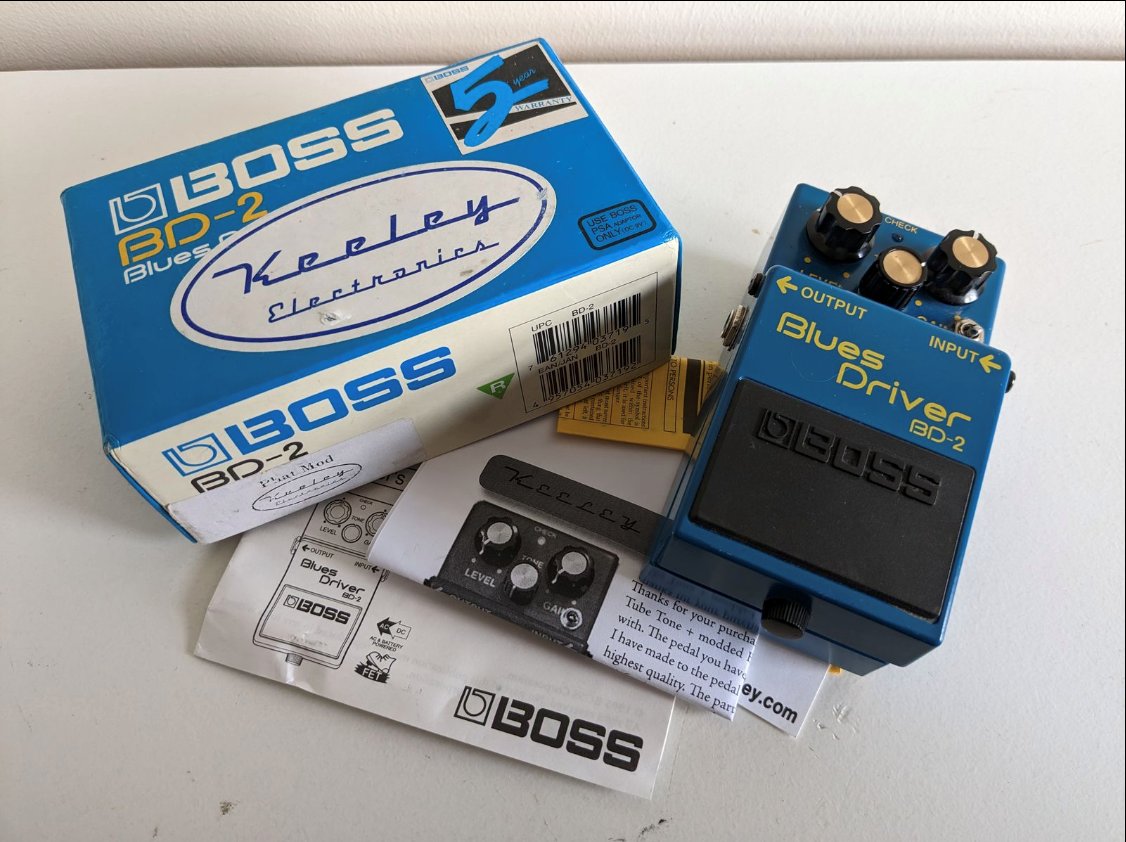
- Keeley modified BD-2 — boutique mod with improved clarity and headroom (also in Gerbman's collection)
- Analog Man Prince of Tone / JHS Morning Glory — boutique alternatives in the same transparent drive category
- Mad Professor Sweet Honey Overdrive — similar philosophy, boutique build
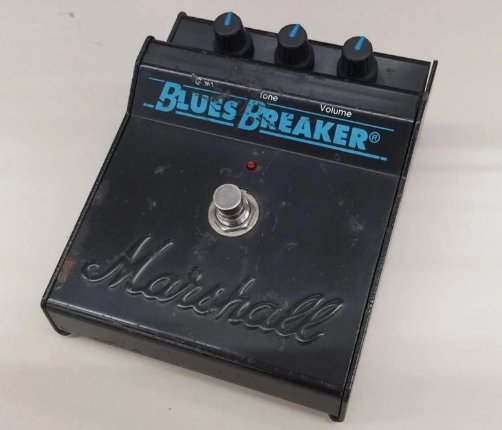
- Marshall Bluesbreaker pedal — the vintage reference in open, transparent blues drive