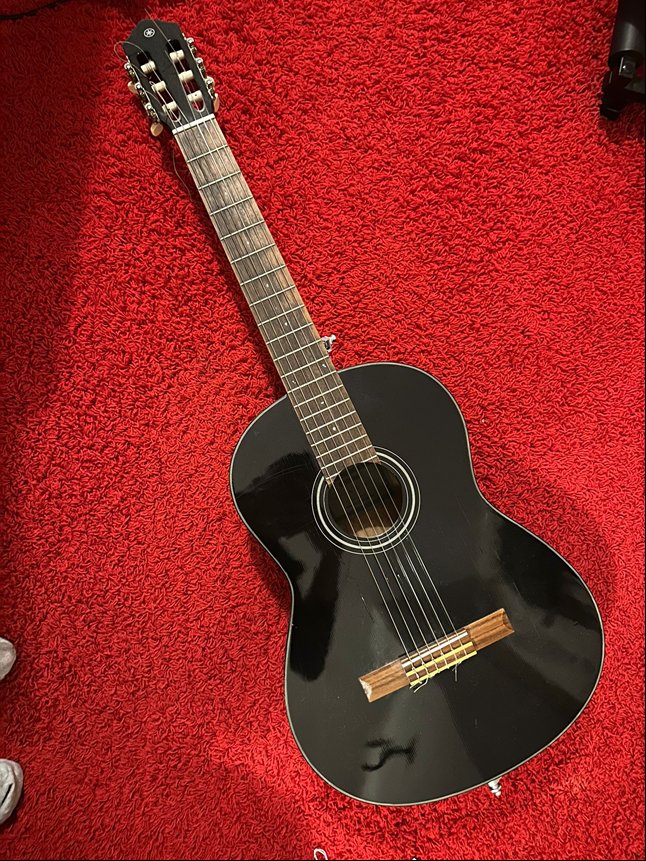
Yamaha C40 Classical Guitar
The First Guitar
The Yamaha C40 is one of the most widely used classical guitars in the world, but for Gerbman it is something far more important. This is where everything started. The very first notes, the first chords and the first feeling of what it means to play guitar all happened on this instrument.
Manufacturer and Model Background
Yamaha introduced the C40 as part of its student classical guitar range. Built for reliability and accessibility, the model has been in production for decades and is typically manufactured in Indonesia under strict quality control. The construction is simple but effective — a spruce top paired with meranti back and sides, a nato neck and a rosewood fingerboard. These materials are chosen not for luxury, but for stability and consistency.
That consistency is exactly why the C40 became one of the most recommended beginner guitars worldwide. It is still in production today and continues to be a starting point for thousands of players every year.
Why This Guitar Matters in Blues
Before tone comes feel. Blues has never been about complexity or expensive gear. It is about phrasing, dynamics and emotion. A nylon string guitar like the C40 forces a player to develop exactly those elements. Without distortion or sustain to hide behind, every note has to be placed with intention. The softer attack and natural compression of nylon strings make you listen more closely to your touch.
This is the same foundation you hear in players like B.B. King and Eric Clapton, where expression always comes before gear.
What Respected Blues Guitarists Did With It
No great blues player started with a perfect rig. Stevie Ray Vaughan developed his touch long before his Stratocaster ever hit a loud amp. John Mayer often speaks about dynamics and right-hand control as the true source of tone. In that sense, the Yamaha C40 plays the same role. It strips everything back to the essentials.
For Gerbman, this guitar is directly connected to that same idea. Learning to control notes without help from gear is what later allows you to shape a powerful electric blues tone.
Sound Profile
The Yamaha C40 delivers a warm, rounded and intimate sound.
What Makes It Special
On paper, the Yamaha C40 is a simple guitar. What makes it special is not the specification, but what it represents. It is an instrument that does exactly what it needs to do without getting in the way. It stays in tune, plays comfortably and allows a player to focus on learning.
For many guitars in this price range, that is not guaranteed. Yamaha's consistency is what sets it apart. But in this specific case, the real value is personal.
This is not just a beginner guitar in Gerbman's collection. This is the first guitar. This is where the journey started.
The instrument was bought for just 70 euros. Nothing special on paper — just a simple classical guitar to get started. But that is exactly the point. Every player has that one instrument where things begin to make sense. For Gerbman, it was this Yamaha C40. The first chords, the first blues licks and the first attempts at bending notes all happened here.
If you look closely at the fretboard, you can still see small white position markers that were added by hand using correction fluid. They were never meant to be perfect — just a practical way to find the right notes on the neck. That detail captures the essence of this guitar. Not expensive, not perfect, but real.
Today, Gerbman's sound is built on Stratocasters, tube amplifiers and carefully selected pedals. But the foundation of that sound — the touch, the phrasing and the feel — was built right here.
Rarity and Availability
The Yamaha C40 is extremely common and widely available worldwide. Still in production and easy to find both new and used. Rarity classification: common.
Variants and Alternatives
- Yamaha C40II — a refined version with small updates to playability and finish
- Cordoba C5 — boutique step-up with improved materials and projection
- Harley Benton CG series — similar entry-level concept at a comparable price
- Older Yamaha classical guitars from the 1970s and 1980s — often more character in the wood