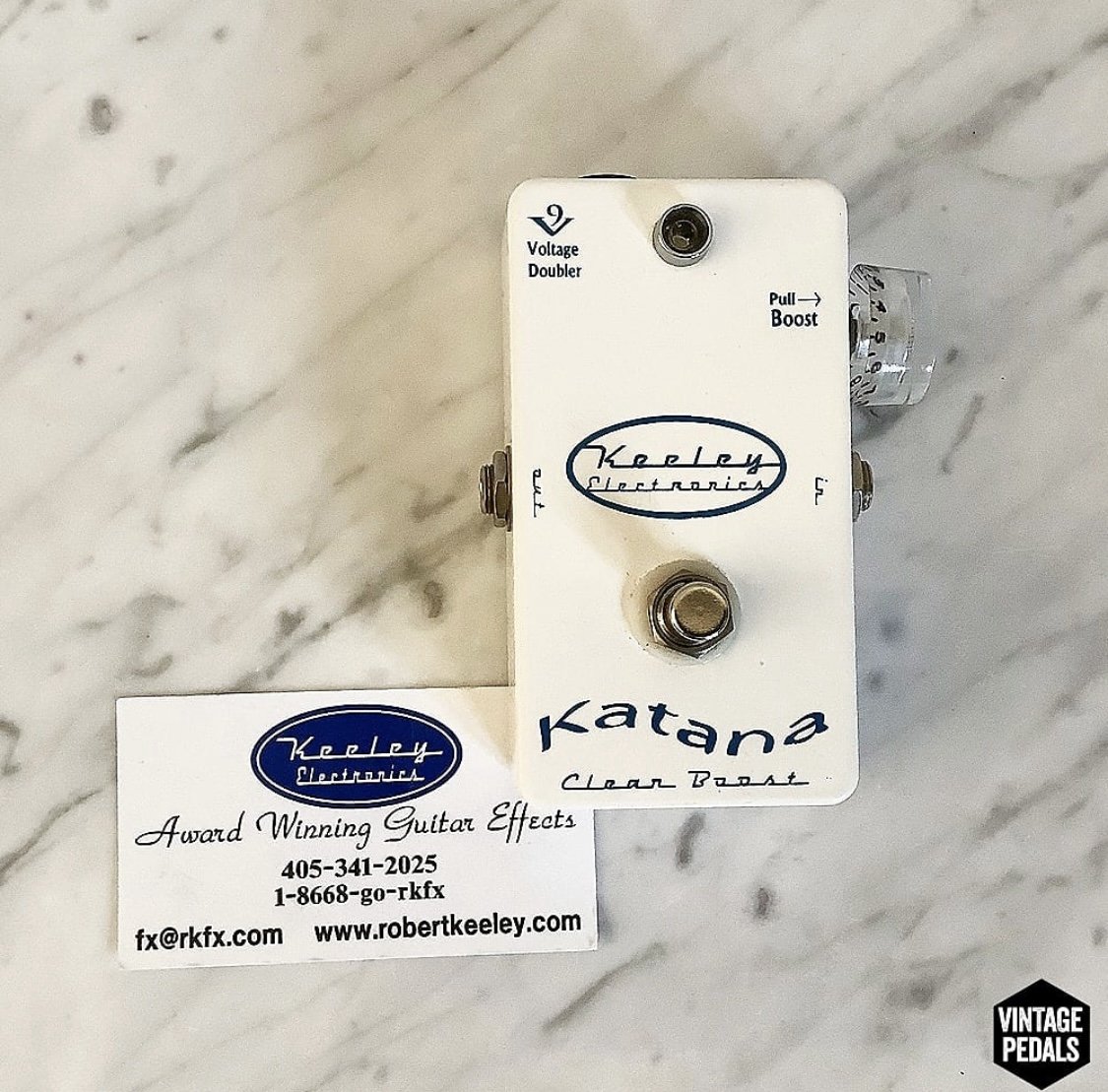
Keeley Katana Clean Boost
The Keeley Katana Clean Boost is a boutique boost pedal designed to increase volume, push tube amplifiers harder and enhance the natural tone of a guitar without coloring it. Unlike many overdrive pedals, the Katana focuses on transparency and headroom. It allows the guitarist to make the amplifier itself produce the overdrive while keeping the original guitar tone intact. This approach makes the Katana particularly valuable for blues players who rely on dynamic interaction between the guitar and a tube amplifier.
Manufacturer and Model Background
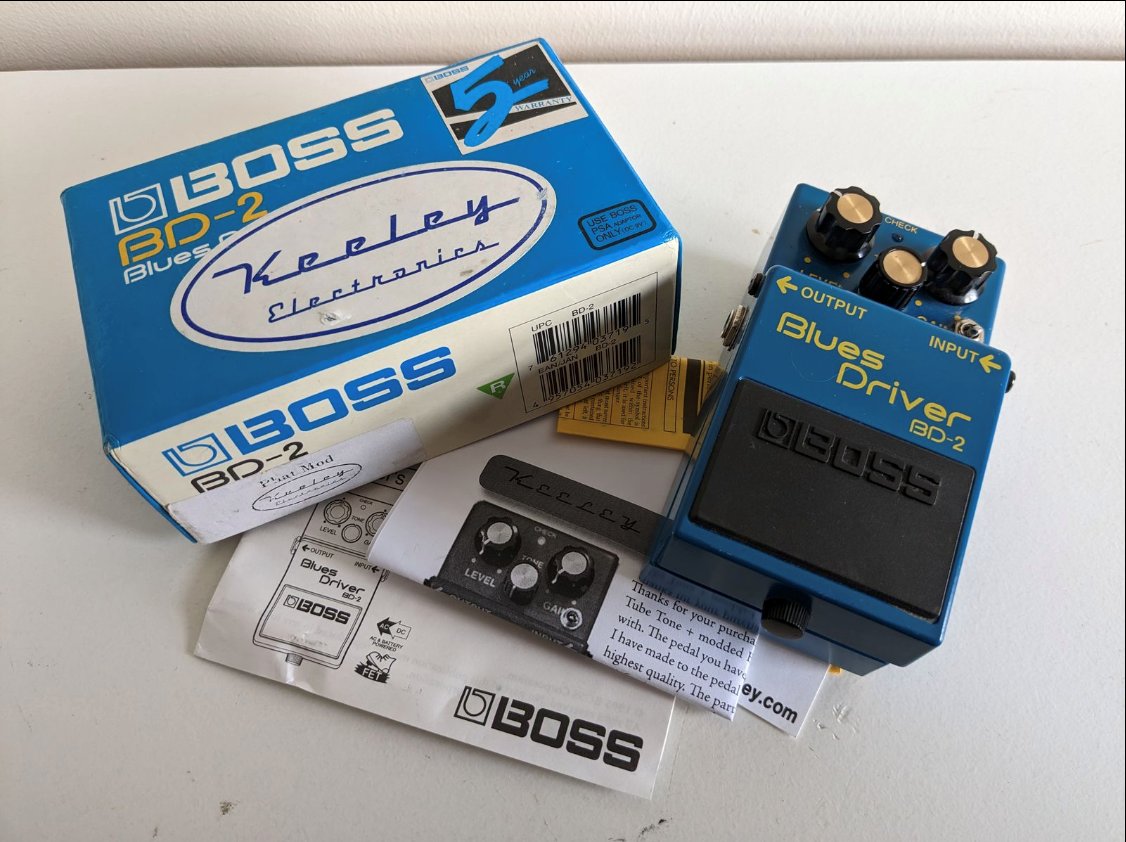
Keeley Electronics was founded by Robert Keeley in Oklahoma in the early 2000s. The company first became famous for modifying pedals such as the Boss BD-2 Blues Driver and the Ibanez Tube Screamer. Keeley quickly gained a reputation for improving signal clarity, dynamic response and build quality.
The Katana Clean Boost was introduced in the mid 2000s and became one of Keeley's flagship original designs. The pedal uses a high quality JFET transistor stage that behaves in a similar way to the input stage of a tube amplifier, resulting in a very natural gain structure rather than the clipping typical of many boost pedals. Early versions were handmade in small batches in the United States. Later versions were released in smaller enclosures with additional switching options. The pedal is still in production today in revised formats.
Why This Pedal Matters in Blues
Blues guitar tone is traditionally built around the interaction between guitar, amplifier and playing dynamics. Many classic players relied on boosting the front end of an amplifier rather than generating distortion in pedals. A clean boost like the Katana allows a guitarist to push a Fender style amplifier into natural tube breakup without masking the character of the guitar.
For Stratocasters this means preserving the glassy top end while adding sustain. For Les Pauls it thickens the midrange and creates a smooth singing overdrive. Because of this, clean boosts have become a key part of many modern blues pedalboards.
What Respected Blues Guitarists Did With It
While the Katana itself is a modern boutique pedal, the concept behind it is closely tied to classic blues tone. Players such as Stevie Ray Vaughan often boosted their amplifiers using pedals like the Tube Screamer. The goal was not simply distortion but pushing the amplifier harder to create natural tube compression.
Modern blues players including Joe Bonamassa and John Mayer frequently use clean boost pedals to add gain stages without changing the fundamental tone of the guitar and amplifier. The Katana fits directly into that tradition.
Sound Profile
The sound of the Keeley Katana is extremely transparent.
What Makes It Special
Several design aspects make the Katana unique among boost pedals. The JFET gain stage is voiced to emulate the behavior of a tube amplifier input stage. This results in a very musical gain structure rather than a sterile volume increase.
The push-pull boost control effectively gives the player two levels of boost in a single knob. Standard mode acts as a subtle tone enhancer. Pulling the knob activates a second gain stage that can drive an amplifier much harder, creating a powerful solo boost. The pedal also offers unusually high headroom thanks to its internal voltage doubling circuit, keeping the sound open and dynamic even under heavy boost. Early Keeley pedals were hand assembled and individually tested, contributing to their reputation in the boutique pedal market.
For Gerbman's blues oriented sound a clean boost plays an important role. His core tone is based around Fender style amplifiers such as the Deluxe Reverb and Bassman combined with Stratocasters. In this setup the Katana pushes the front end of the amplifier slightly harder during solos without dramatically altering the tone.
Placed before overdrive pedals it increases sustain and thickness. Placed after overdrives it serves as a pure volume boost for solos. Because the pedal preserves the character of the guitar and amplifier it fits naturally into a blues signal chain focused on touch sensitivity and dynamic response.
Rarity and Availability
Original large enclosure Keeley Katana pedals are no longer produced and are considered somewhat collectible. On the used market they appear regularly but prices tend to be higher than standard boost pedals due to the pedal's reputation and build quality. Later mini versions are widely available and remain in production. Rarity classification: somewhat rare for early versions, common for later versions.
Variants and Alternatives
- Keeley Katana Mini — compact modern version with additional tone shaping
- Keeley Katana Blues Drive — variant combining boost and mild overdrive
- Xotic EP Booster — boutique boost inspired by the Echoplex preamp stage
- MXR Micro Amp — classic clean boost widely used to push tube amps
- Dallas Rangemaster Treble Booster — historic boost circuit behind many classic blues tones