BOSS CE-2W Chorus
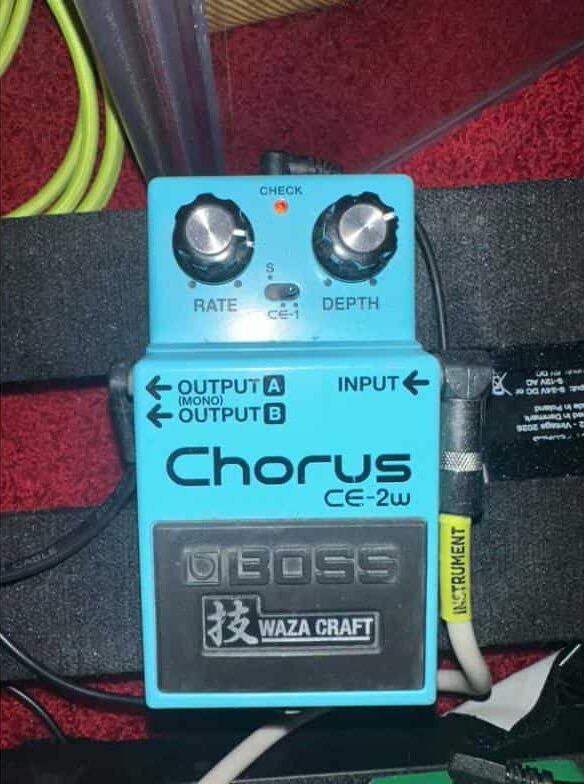
The BOSS CE-2W puts two generations of analogue chorus on Gerbman's pedalboard. Its three modes cover the CE-2 and the chorus and vibrato voices of the earlier CE-1, with outputs for mono or stereo use.
Manufacturer and Model Background
BOSS is part of Roland, and this pedal reaches back to the company's earliest chorus designs. The CE-1 Chorus Ensemble arrived in 1976 as the first BOSS effects pedal, bringing the chorus and vibrato sounds of the Roland Jazz Chorus amplifier into a separate unit. The smaller, mono CE-2 followed in 1979. BOSS introduced the CE-2W in 2016 to mark forty years of BOSS effects.
Waza Craft is BOSS's premium compact pedal series. The Japanese word waza refers to art and technique. For the CE-2W, BOSS redesigned the circuitry with modern components to reproduce the older sounds, and the pedal is made in Japan. It is a contemporary analogue design built around that history.
Why This Pedal Matters in Blues
A chorus can work quietly in a blues arrangement. In his playing test for Premier Guitar, Charles Saufley found that the Standard mode could add movement so gently that it almost disappeared into a full mix. That range makes restrained chord textures just as natural an application as more obvious modulation.
Blues Players and the Chorus Connection
There is a documented chorus connection in Stevie Ray Vaughan's recorded sound. Producer and engineer Richard Mullen recalled using a Roland Dimension D while mixing Texas Flood, including the solo in “Mary Had a Little Lamb” and the closing solo in “Pride and Joy”. Vaughan worked the effect himself at the mixing desk, bringing it in and out as the music progressed.
That makes chorus a real Texas blues colour, used selectively. The unit in Mullen's account is a Dimension D, not the CE-2W: the connection lies in how chorus was used, not in a shared pedal.
Sound Profile
A three-position selector gives the CE-2W three distinct voices. Rate sets the speed of the modulation, Depth sets the amount.
Saufley's review describes a clear difference between the restrained Standard voice and the deeper, sometimes darker CE-1 character. He also heard a rotary-like quality in some middle-range vibrato settings. Those are listening impressions, not measurements.
What Makes It Special
The CE-2W extends the original designs in two practical ways. The CE-2 voice gains stereo output, which the mono original never had, and the CE-1 chorus voice gains a Depth control, which the original CE-1 lacked. Both sit behind the familiar two-knob layout.
With only OUTPUT A (MONO) connected, the pedal mixes the direct guitar and the modulated signal. With both outputs connected, OUTPUT A carries the modulated signal and OUTPUT B the direct signal. Sent to two amplifiers or two channels, that split creates the stereo image.
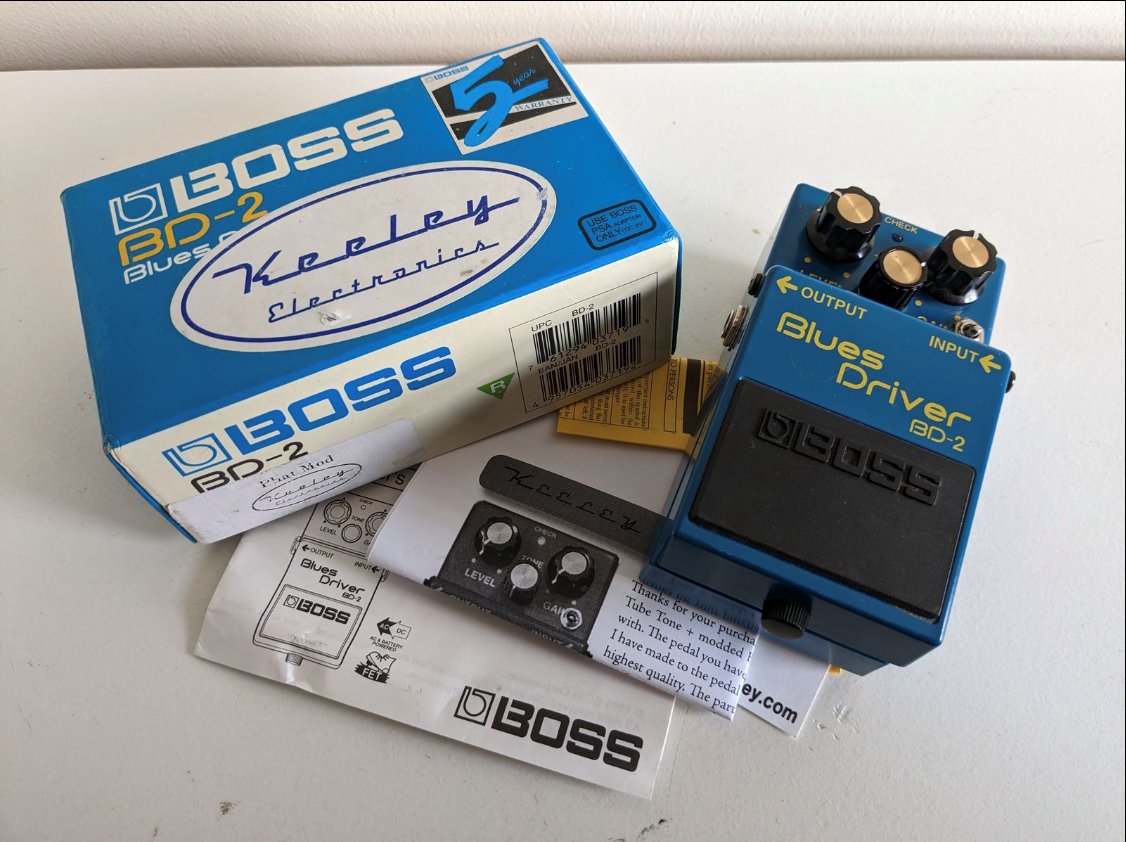
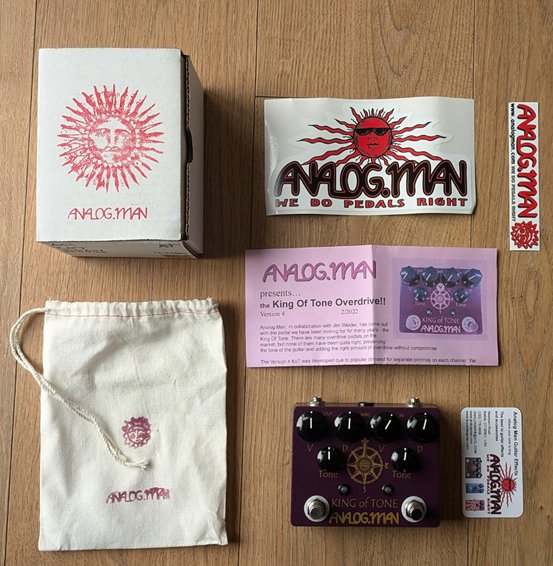
The CE-2W gives Gerbman a dedicated choice of chorus textures and the CE-1 vibrato voice. His board is built around overdrives such as the Keeley-modified BD-2 and the Analog Man King of Tone; the CE-2W adds modulation to those sounds.
That fits the way the pedalboard is set up: clarity and feel come first, and modulation is used sparingly. The CE-2W supplies subtle movement or a more obvious swirl when a song asks for it.
Rarity and Availability
The CE-2W is still in production and widely available new from regular dealers. It is a modern interpretation of historic chorus designs rather than a vintage collectible.
Variants and Alternatives
- BOSS CE-2 (1979) — the vintage mono original, recreated by the Standard mode
- BOSS CE-1 Chorus Ensemble (1976) — the source of the CE-1 Chorus and Vibrato modes
- TC Electronic Afterglow Chorus — an analogue chorus at a much lower price
- JAM pedals WaterFall — boutique analogue chorus and vibrato